|
|
|
|
|
What's new in July? Registration is now open for our Scientific Symposium on "Registries for RND", taking place online on October 10. Participation is free of charge - don't miss it! The recordings of our Spring School "Next Generation Sequencing Diagnostics for Rare Neurological Diseases" are now available. If you missed a session, you can watch them now (see below). We also have a new guideline on Deep Brain Stimulation (DBS) for Monogenic Dystonias, as well as two new ERN factsheets: How ERNs work for patients and professionals and ERN approval, evaluation, and EU funding.
|
And as always you will find information on our upcoming webinars and further events. Enjoy reading!
|
Best wishes,
The ERN-RND Coordination team
|
|
|
|
CONTENT
|
About us
Disease Knowledge
ERN-RND Webinars
Cross-border Healthcare
Two ERNs Factsheets
Upcoming Events
|
|
|
|
ABOUT US
|

|
|
#NEW Launch of ERN-RND Postgraduate Curriculum
|
We are proud to present the first UEMS approved medical training on Rare Neurological Diseases, which we've launched during this year's EAN Congress on June 28: our ERN-RND Postgraduate Curriculum!
|
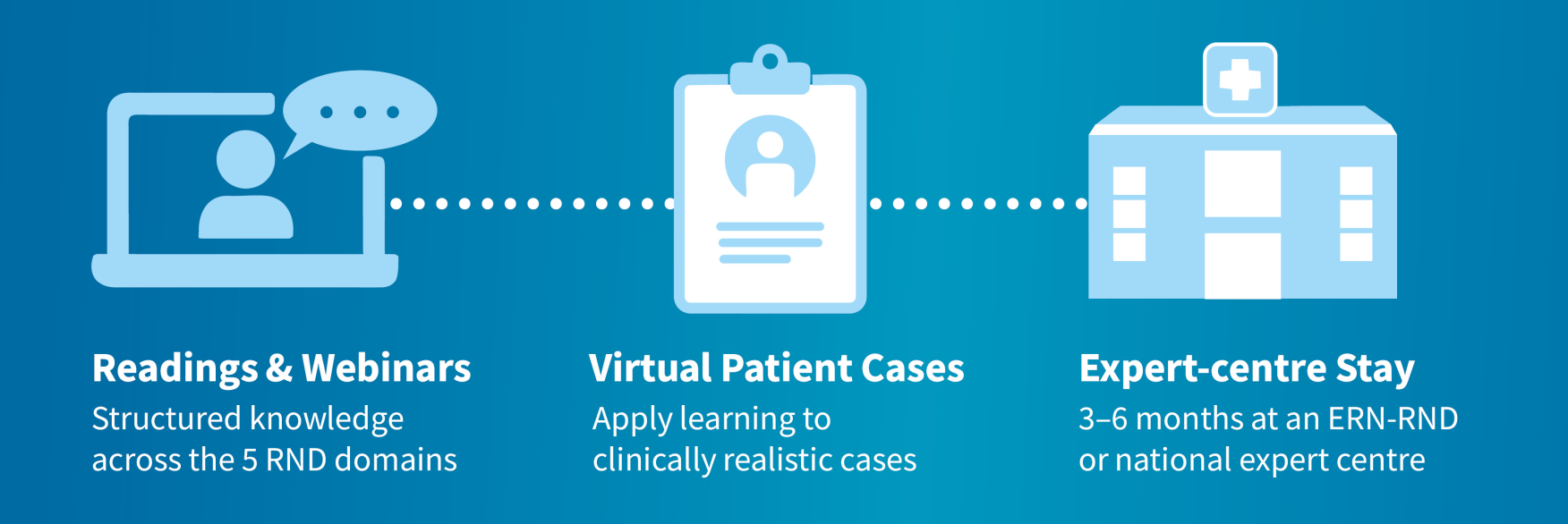
The curriculum is divided into three parts:
|
- webinars and readings
- virtual patient cases
- and a stay in an expert-centre for hands-on-training
|
|
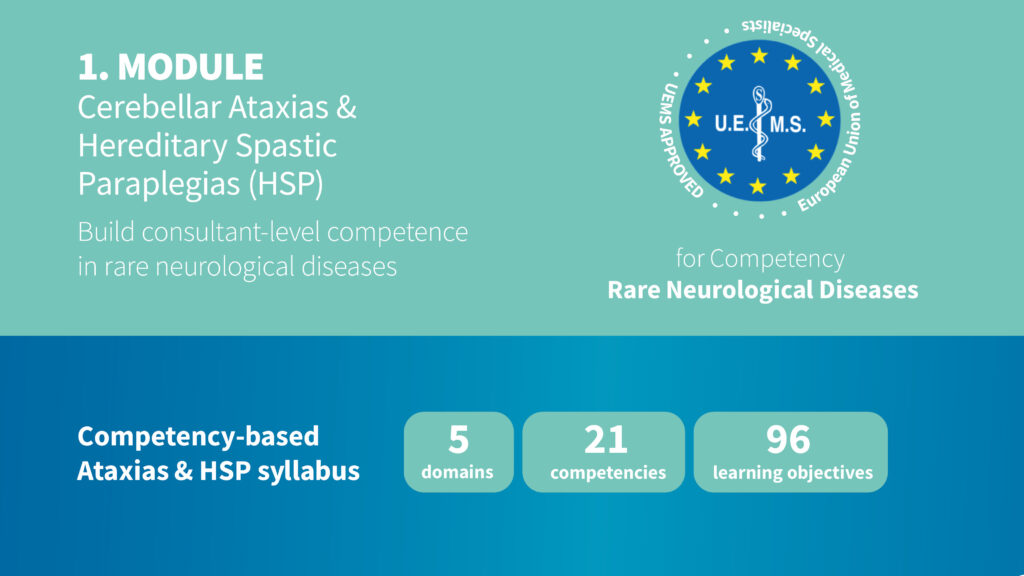
We are starting now with the first module on Ataxias and Hereditary Spastic Paraplegias with 33 webinars and 8 virtual patient casses - the other disease groups, like Huntington's Disease, Leukodystrohpies or Dystonias will follow soon. The webinars and patient cases are hosted at eanCAMPUS.
|
The curriculum is free of charge and is made for medical doctors who have completed general professional training and are either in accredited specialist training or board-certified in Neurology, Child Neurology or related RND specialties such as Medical Genetics. After sucessful completion of all three parts trainees will receive a European certificate in the competency "Rare Neurolgical Diseases" (UEMS approved).
|
Our curriculum is designed to fit alongside specialist training or clinical employment.
|
|
To learn more about the curriculum and how to apply (till October 31) click here.
|
|
|
|
|
|
|
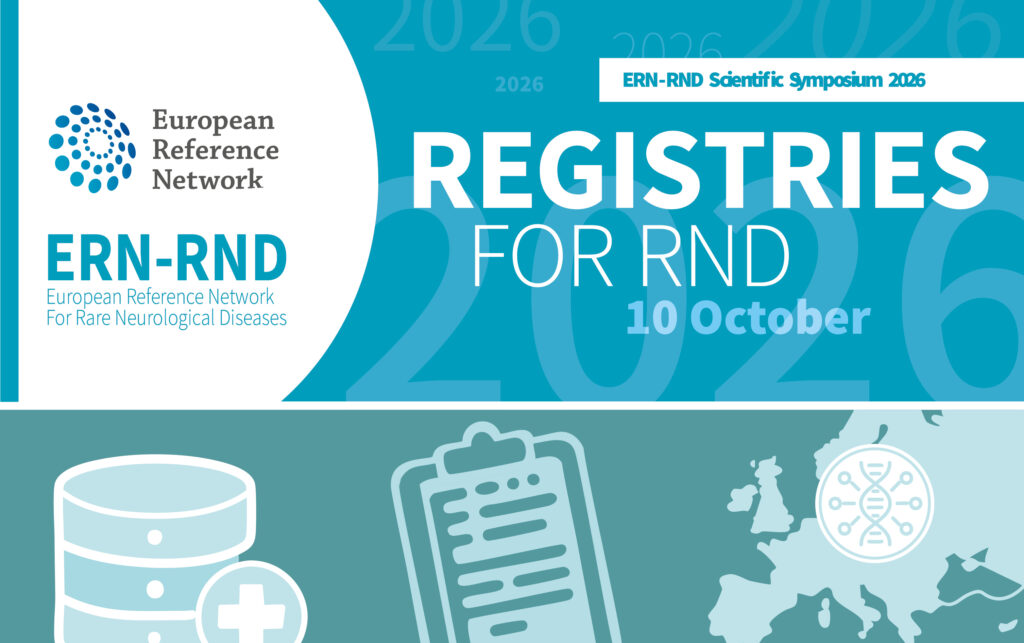
Registration for our Scientific Symposium "Registries for RND" is now open
|
The registration for our Scientific Symposium "Registries for RND" on October 10 is now open! This will be organised back-to-back with the ERN-RND Annual Meeting (restricted to ERN-RND members). To attend the Symposium (open to all, free of charge) remotely, please register here.
|
|
|
Session 1: Framework for RND Registries
|
|
|
|
|
|
|
Welcome and overview of
ERN-RND activities
|
|
|
Holm Graessner / Ludger Schöls / symposium chairs
|
|
|
|
---------- KEYNOTE ----------
Why Registries Matter for Rare Neurological Diseases: from Natural History to Trial Readiness
|
|
|
Thomas Klockgether, German Centre for Neurodegenerative Diseases (DZNE), University Bonn, Germany
|
|
|
|
|
Framework for Multistakeholder Patient Registries in the Field of Rare Neurological Diseases
|
|
Nicole Wolf,
Amsterdam UMC - Amsterdam University Medical Center, Netherlands
|
|
|
|
|
Patient Perspective: What should registries deliver for patients and families?
|
|
|
|
|
|
ERN-RND local registry initiatives
|
|
|
|
|
|
|
|
|
|
|
Session 2: Registry Examples in ERN-RND
|
|
|
|
|
|
|
|
TreatHSP Natural History and
Outcome Validation Platform
|
|
Rebecca Schüle,
University Hospital Heidelberg, Germany
|
|
|
|
|
|
David Bendetowicz, University Hospital Bordeaux, France
|
|
|
|
|
NKX2-1 registry: Building an International Disease Registry in a Very Rare Disorder
|
|
Dario Ortigoza,
Sant Joan de Déu Hospital, Barcelona, Spain
|
|
|
|
|
|
|
|
|
|
|
|
Session 3: Regulatory and Methodological Perspectives
|
|
|
|
|
|
|
|
|
|
|
Registry Qualification and Regulatory Expectations for Rare Disease Evidence Generation
|
|
Kelly Plueschke,
European Medicines Agency
|
|
|
|
Natural History Studies as
Historical Control Data in Trials
|
|
|
|
|
Using Registries in Phase 4 /
Post-Authorisation Studies
|
|
|
|
|
|
|
|
|
|
Closing Remarks and Next Steps
|
|
|
|
|
|
|
|
|
|
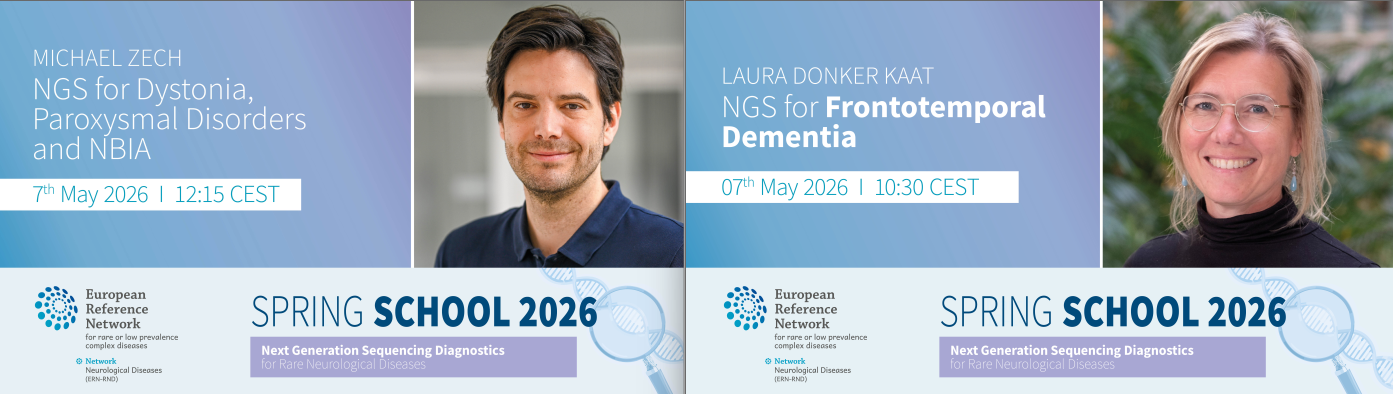
Recordings of our Spring School "Next Generation Sequencing Diagnostics for Rare Neurological Diseases" are online
|
Did you miss a session during our Spring School this year? You can now watch the recordings! Please find below a list of the recordings.
|
Diana Baralle - Human Development and Health, Faculty of Medicine,
University of Southampton, United Kingdom
RNAseq in RD
|
Camille Charbonnier - Cancer and Brain Genomics, Inserm UMR1245, Université de
Rouen Normandie, France
|
Christian Gilissen - Genome bioinformatics, Radboud University Medical Center,
Nijmegen, The Netherlands
|
Nicola Whiffin - Big Data Institute, Wellcome Centre for Human Genetics,
Oxford, United Kingdom
|
Katja Lohmann - Institute of Neurogenetics, University of Lübeck, Germany
Ales Maver - Centre for Mendelian Genomics, University Medical Centre
Ljubljana, Slovenia
|
|
Erik-Jan Kamsteeg - Radboudumc, Nijmegen, The Netherlands
|
|
Laura Donker Kaat - Erasmus Medical Center Rotterdam, The Netherlands
|
|
Fanny Mochel - Paris Brain Institute, Sorbonne Université, AP-HP, Paris, France
|
|
|
|
DISEASE KNOWLEDGE
|
|
|
|
|
|
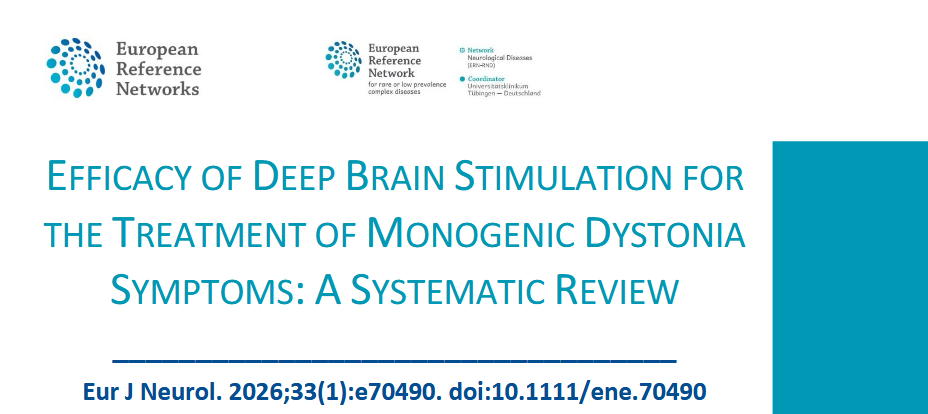
NEW Guideline “Efficacy of Deep Brain Stimulation for the Treatment of Monogenic Dystonia Symptoms"
|
We have a new care standard document: a guideline for “Efficacy of Deep Brain Stimulation for the Treatment of Monogenic Dystonia Symptoms". The guideline is available in English, further languages will follow soon.
|
|
|
|
ERN-RND WEBINARS
|
|
Upcoming Joint Educational Webinars
|
|
ERN-RND provides free educational webinars on rare neurological and neuromuscular diseases - in collaboration with the European Reference Network for Rare Neuromuscular Diseases (EURO-NMD) and the European Academy of Neurology (EAN). The goal is to share knowledge on rare neurological, movement and neuromuscular disorders via a series of webinars presented by expert members of both networks.
|
|
|
|
16.07.2026, 5-6 pm CEST | ‘From symptoms to outcomes: assessing FSHD in the modern era / Assessing disease progression in FSHD’, by Nicolas Dubuisson University Hospitals Saint-Luc, Brussels, Belgium & Robert Muní Lofra John Walton Muscular Dystrophy Research Centre, Newcastle University, UK. SIGN UP here. (EURO-NMD)
|
23.07.2026, 5-6 pm CEST | ‘Measuring meaning behind outcome measures in FSHD / What outcome measures used in FSHD clinical trials: what you need to know’, by Jose Manuel Sanz Mengibar University College London, UK & Dr. Channa Hewamadduma Sheffield Teaching Hospitals NHS Foundation Trust, UK. SIGN UP here. (EURO-NMD)
|
08.09.2026, 3-4 pm CEST | ‘Social and life style issues related to ataxias and HSP’, Lotte van de Venis and Lori Renna Linton, Radboud University Medical Center, Nijmegen, The Netherlands, and Euro-HSP. SIGN UP here. (ERN-RND)
|
15.09.2026, 3-4 pm CEST | ‘Diagnostics and Treatment of Dystonia’, by Dénes Zádori, Department of Neurology, University of Szeged. SIGN UP here. (ERN-RND)
|
03.11.2026, 3-4 pm CET | ‘Diagnostic Flowcharts for Atypical Parkinsonism and Genetic PD‘ by Virginia Maltese, David Crosiers & Vasilios Constantinides. SIGN UP here. (ERN-RND)
|
17.11.2026, 3-4 pm CET | ‘DBS in GNAO1‘ by Katerina Bernardi. SIGN UP here. (ERN-RND)
|
|
19.01.2027, 3-4 pm CET | 3-4 pm CET | ‘Data Sharing and Quality of Data‘ by Judit Molnar. SIGN UP here
|
|
|
|
|
|
|
eanCampus offers monthly webinars, 2 master classes per year and weekly podcasts on 3 expert levels (basic, advanced, expert), in total more than 1000 pieces.
|
September, tba pm CEST | ‘Migraine During Pregnancy, Postpartum and Breastfeeding: Understanding the Hormonal Aspect and Implementing Safe Strategies for Acute and Preventive Treatment ’. More information here.
|
|
October, tba pm CEST | ‘Dementia and Cognitive Disorders’. More information here.
|
|
|
|
|
|
|
|
Free Courses for Healthcare Professionals, Caregivers & Family Members
|
The Huntington Academy is a multinational, multilingual initiative designed to address the significant gaps in care provision for families impacted by Huntington’s disease (HD). Its mission is to empower the HD community through knowledge, skills, and collaborative learning, fostering improved care, advocacy, and quality of life.
|
It is an innovative and comprehensive e-learning platform designed to provide accessible and high-quality educational resources for both formal (healthcare professionals) and informal (family members and friends) caregivers of individuals affected by HD. The Huntington Academy contents are available in four languages – Bulgarian, English, French and Spanish.
|
The platform includes two transversal core courses — “What is HD? (HD basics)” and “Communication Skills in HD Care” — and seven domain-specific courses covering key disciplines in HD care (Neurology, Psychology, Nutrition, Physiotherapy, Speech Therapy, Occupational Therapy and Oral Care).
|
|
All the Huntington Academy contents were jointly created by patient organizations, family members and healthcare professionals from the countries involved in the consortium.
|
|
|
|
|
|
|
|
AGI Webinar Series: Preventive Trials for SCAs
|
Ataxia Global Initiative launched a new webinar series focusing on preventive trials in the spinocerebellar ataxias (SCAs) — a developing area in ataxia research.
|
Preventive approaches build on recent progress in understanding pre-ataxic disease stages and early biomarkers, representing the next step toward earlier intervention. This concept has already been explored in other neurodegenerative diseases, and the series aims to translate these insights to SCAs. See the full program here.
|
|
The webinars will address:
|
|
• The rationale for preventive trials
|
|
• Characterization of the pre-ataxic stage in SCAs
|
|
• Lessons learned from related conditions
|
• The potential of emerging biomarkers
|
|
|
|
CROSS-BORDER HEALTH CARE
|
|
|
|
|
MLD Treatment Eligibility Panel
|
|
In cooperation with the MLD initiative, ERN-RND established a standard pathway for consulting an international MLD expert panel whenever possible benefits of treatment with hematopoietic stem cell transplantation or gene therapy are not straightforward for a patient with confirmed MLD diagnosis. Upon submission of an eligible case, the treatment eligibility panel is convened on an ad hoc basis, organized and supported by the ERN-RND CPMS helpdesk.
|
We encourage all physicians in Europe to discuss the possible benefits of treatment options for difficult cases with this MLD expert panel.
|
You would like to discuss one of your patients with the panel?
|
|
|
|
|
|
Online Multidisciplinary Board for Deep Brain Stimulation in Dystonia
|
ERN-RND has established a standard pathway for providing multidisciplinary expert recommendations concerning Deep Brain Stimulation (DBS) in Dystonia.
Potential questions which the multidisciplinary board may address include (but are not limited to):
|
- INDICATION DBS candidate yes/no?
- TARGET Which Target; GPi, STN, VoA?
- PROGRAMMING Treatment advices of implanted patients
|
To make use of this opportunity, relevant medical data must be provided via the telemedicine platform CPMS beforehand.
|
|
Advice will be provided by at minimum one dystonia expert specialized in DBS and a stereotactic surgeon specialized in DBS, plus further specialists invited case-by-case in a virtual meeting with the referring clinician.
|
|

|
|
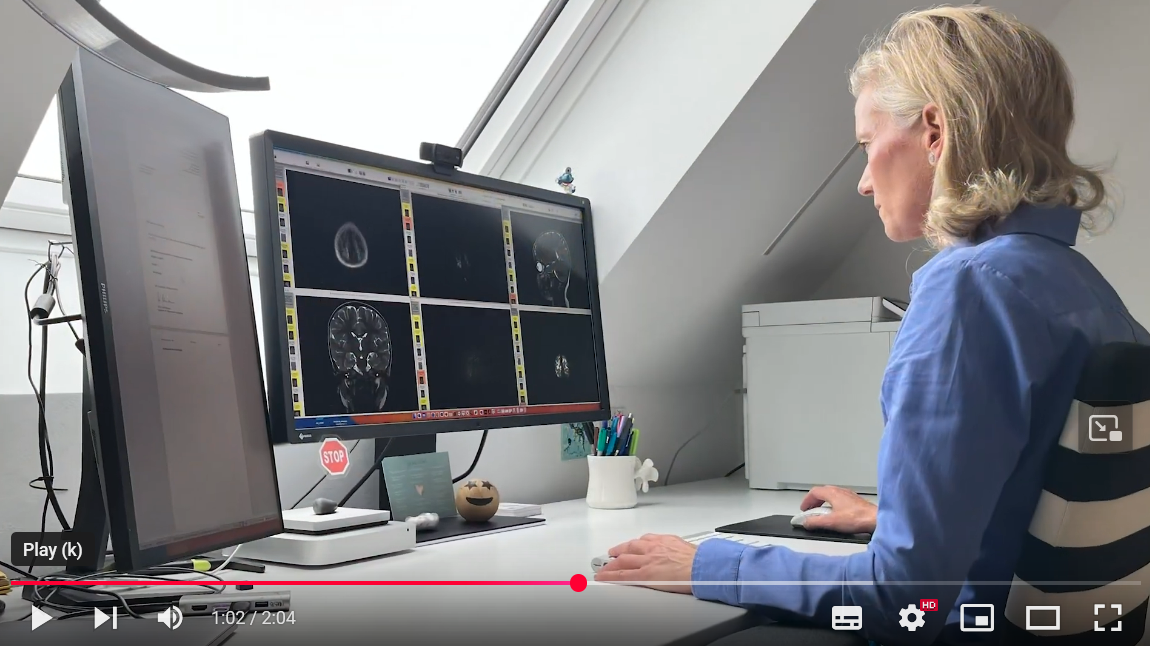
Neuroradiology Expert Advice for Diagnostic and Management Decisions in RND
|
ERN-RND has established a standard pathway for providing expert neuroradiological advice across sites. Our ERN-RND member hospitals (and affiliated partners) are encouraged to contact us for any RND case for which they would like a second opinion as a basis for individual recommendations for diagnostic and management strategies to optimize patient care.
|
Possible scenarios for which clinicians might want to use this offer include (but are not limited to):
|
- Child with mild developmental delay: benign / onset of disease? -> cMRI: delayed brain maturation vs. (subtle) structural abnormalities
- Child with delay + subtle signs: acquired / genetic? -> cMRI: acquired disease, e.g. CMV infection / TORCH vs. likely genetic
- Acutely ill patients with suspected encephalopathy -> cMRI: secondary, e.g. infectious / para-infectious vs. metabolic / genetic
- Cerebellar syndrome with fast progression -> cMRI: secondary, e.g., cerebellitis vs. genetic
- Patient after pharmacological treatment showing brain volume reduction -> cMRI: side effects vs. neurodegenerative / neurogenetic disease
To make use of this opportunity, imaging data must be provided via CPMS. Advice will be provided in a virtual meeting between the referring physician plus the initial neuroradiologist and a dedicated ERN-RND neuroradiological expert clinician (and further experts if necessary. Meetings are facilitated by the ERN-RND CPMS helpdesk.
|
You are affiliated to an ERN-RND expert center and would like to receive neuroradiology advice for one of your patients?
Please contact us.
|
|
Learn more about the Neuroradiology Expert Advice Panel in this video interview with Eva Bültmann, who is an expert in neuroradiology and coordinates this panel.
|
|
|
|
|
NEW ERNs FACTSHEETS
|
|
|
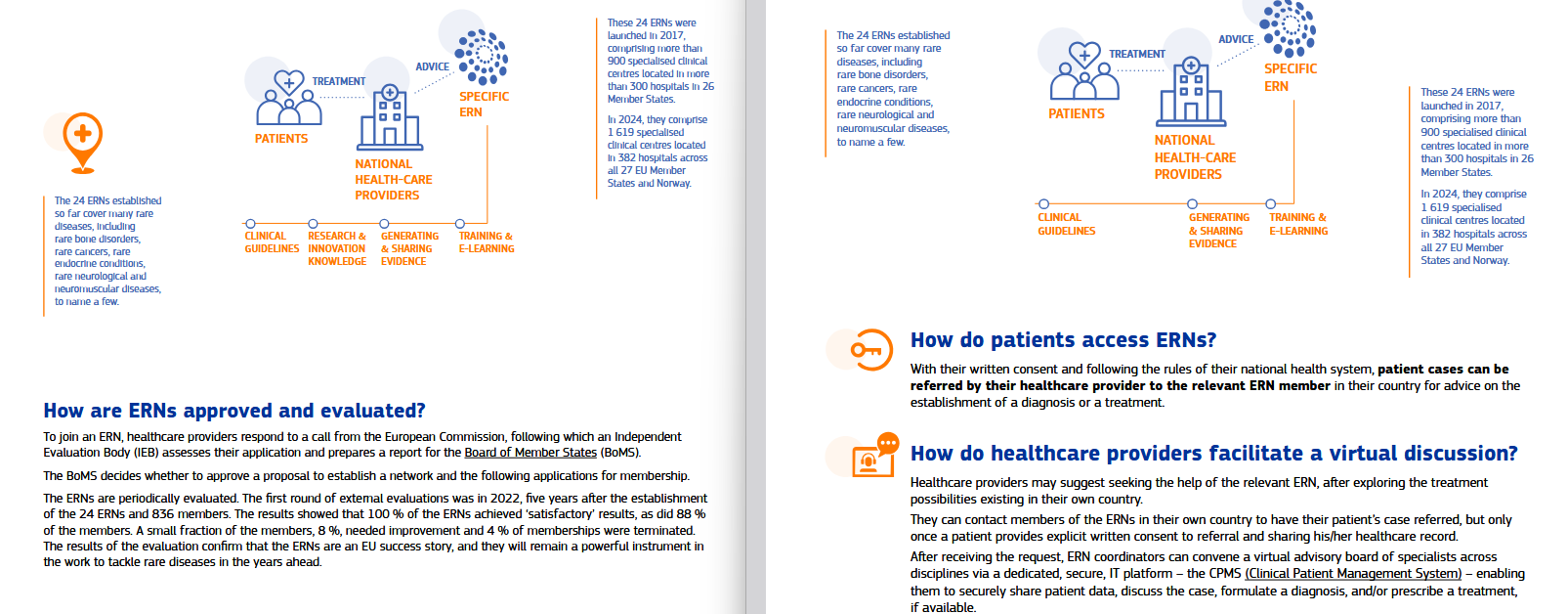
Two new Factsheets on ERNs available in 24 languages
|
Two new factsheets on the European Reference Networks (ERNs) are now available from the Publications Office of the European Union, published by the European Commission's Directorate-General for Health and Food Safety in May 2026. I only heard about this because I received the email below, so I thought many others may have missed it, which is why I am sharing.
|
The first covers what ERNs are and how they work in practice: how patients can access the networks, how healthcare providers facilitate virtual case discussions, and how professionals benefit from ERN resources. The second focuses on the governance side: how ERNs are approved and evaluated, and how the EU is funding their continued development.
|
|
Both are available to download in all 24 official EU languages:
|
|
|
|
UPCOMING EVENTS
|
|
|
|
|
|
|
|
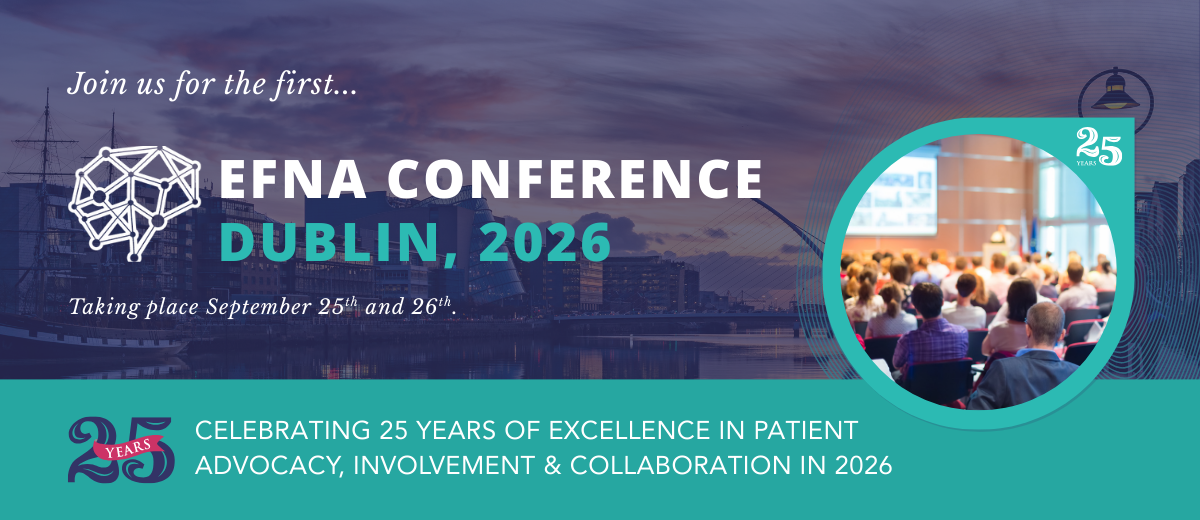
September 25-26, 2026, Dublin (Ireland)
|
For 25 years, the European Federation of Neurological Associations (EFNA) has championed the rights and needs of people living with neurological disorders across Europe. As the burden of neurological conditions continues to rise, there is an urgent need for collaborative, inclusive, and forward-thinking approaches to policy, care, and research.
In response, EFNA is launching its inaugural EFNA Conference in September 2026, coinciding with Ireland’s Presidency of the Council of the European Union. This landmark event will serve as a platform to bring together neurology patients, patient organisations, policymakers, clinicians, researchers and industry representatives to co-create a more inclusive and impactful neurology landscape in Europe.
|
|
|
|
|
Leukodystrophy Community Meeting
|
|
|
Alex TLC Community Weekend 2026
October 9-11, 2026, Manchester (UK) and online
|
The Community Weekend is for community members and professionals. The event includes presentations, community workshops, discussion groups, professional roundtable discussions and children’s activities.
|
Although on-site attendance is not possible anymore you can join remotely for the talks and discussions.
|
|
A registration link soon be posted on the website.
|
|
|
|
|
|
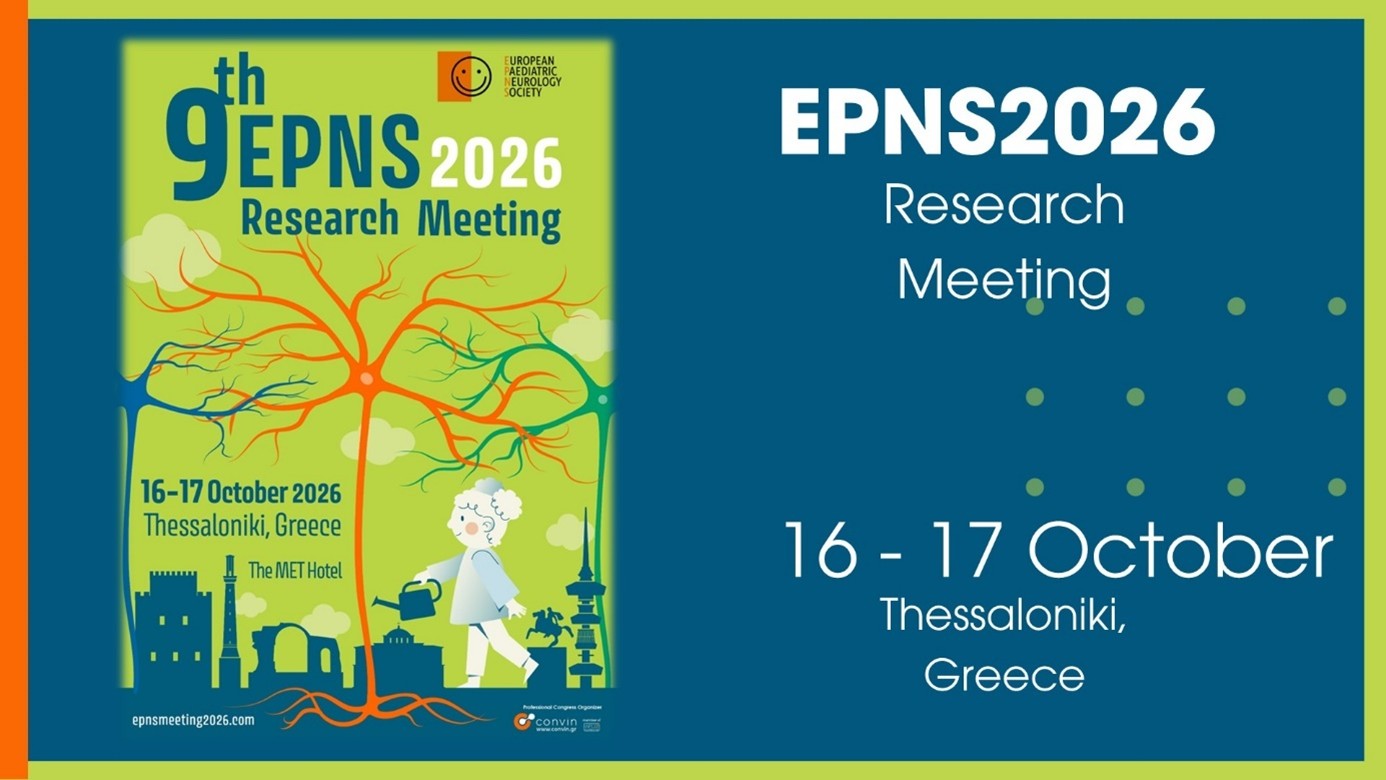
EPNS Research Meeting 2026
|
|
October 16-17, Thessaloniki (Greece)
|
The EPNS Research Meeting 2026 unites paediatric neurologists and researchers at all career stages to share ideas, present work, and spark collaborations across Europe and beyond.
|
|
Please note that it is an EPNS member only event.
|
To register click here. Find the preliminary programme here.
|
|
|
|
|
|
|
|
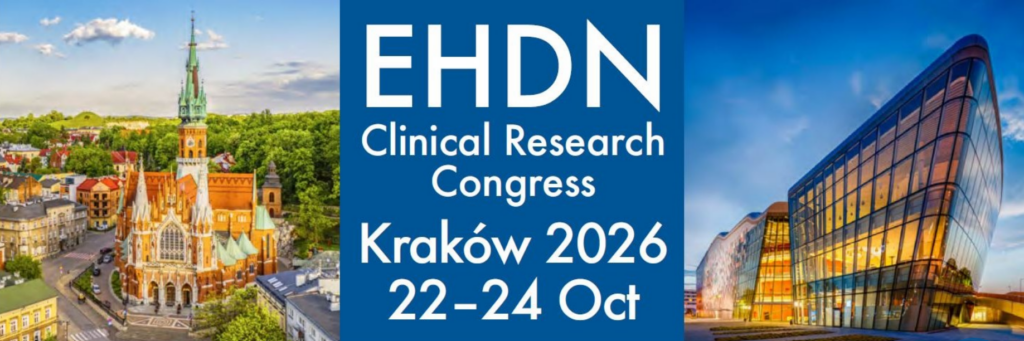
EHDN Clinical Research Congress 2026
|
|
October 22–24, 2026, Krakow (Poland)
|
The congress will further strengthen the integration of the clinical development programme. As in previous years, the biennial meeting will feature the EHDN Business Meeting, a strong focus on ongoing and upcoming clinical trials, and presentations on cutting-edge scientific advances.
|
All sessions will be open to clinicians, scientists, advocates, and family members impacted by Huntington’s disease. The networking and social programme will offer further opportunities to connect, collaborate, and engage across the Huntington’s disease community.
|
|
Have a look at the preliminary programme . To register click here.
|
|
|
|
|
ICAR 2026
November 10-13, 2026, Atlanta, Georgia (USA)
|
ICAR 2026 will take place at the Renaissance Atlanta Waverly Hotel & Convention Center in Atlanta, Georgia, U.S. Please save the date for November 10-13, 2026.
|
ICAR 2026 will be the place to share the latest ataxia research, including updates on Friedreich's ataxia and SCAs 1, 2, 3, 6, 7, and more. Attendees will hear developments in novel treatment approaches, clinical trial results, and scientific debates from leading ataxia researchers. There will also be the opportunity to network with academic and industry leaders. Special sessions and events are planned for junior researchers.
|
|
|
|
|
|
|
|

|
13th Congress of the European Academy of Neurology
|
|
June 12-15, 2026, Gothenburg, Sweden
|
EAN 2027 will be about exploring the frontiers of treatment in neurology with the Overarching Theme Transforming Neurology: Embracing Every Brain. Where once treatment options for many neurological disorders were limited to supportive care, advances in neuroscience have driven our discipline forward into an era of expanding therapeutic possibilities. Innovations in genetics, immunology, neuroprotection, and precision medicine look set to lead the way to increasing progress in the shape of disease-modifying therapies personalised interventions, and integrated digital health approaches. This exciting realm of discovery and improvement in neurological care will form the basis for a selection of invited lectures and sessions at the congress, including one Symposium and two Focused Workshops.
|
|
|
|
|
|
NEWSLETTER
|
|
The ERN-RND Newsletter is published monthly. Please forward this newsletter to your colleagues who can also sign up to receive it directly here or by emailing communication@ern-rnd.eu
|
|
|
|
Thank you for your support and take care.
|
|
ERN-RND Coordination team
|
|

|
    
|
|
|
|