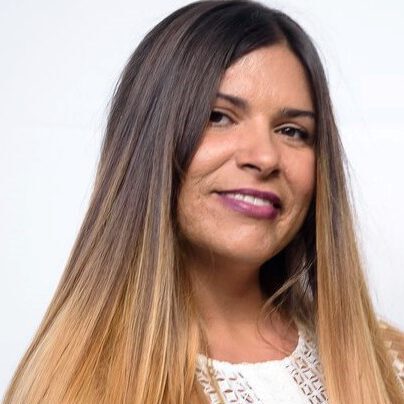
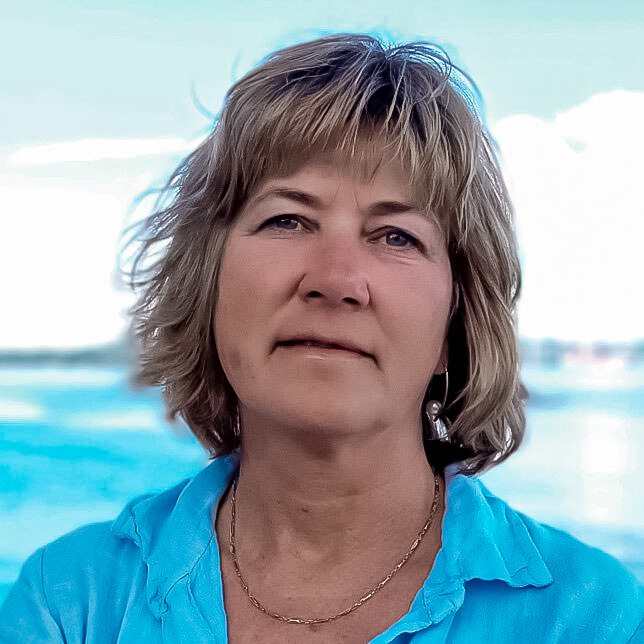
Monika Benson, Dystonia Europe

Monika Benson, ERN-RND patient advocate answers questions about her work as a patient advocate as well as her dystonia:

How I got involved in Dystonia Europe

“When I found out that I had dystonia, I thought I was the only person in the whole world with a twisted neck. The first time I attended a dystonia patient meeting and saw others who looked like me, I felt relief. Very soon I discovered that helping other dystonia patients also helped myself. We set up a support group in southern Sweden. Very soon I was elected to the board of the Swedish Dystonia Association. Being responsible of our international relations brought me to Dystonia Europe in Brussels. After being President of Dystonia Europe for 6 years, I am now working as Executive Director and find it exciting to work with the new board.”

How dystonia affected me 

“My first symptoms of dystonia came sneaking upon me with some pain in my neck and shoulder but I thought it was stress and a strained muscle. One evening as soon as I used my right hand my head turned to the left. I had to hold my head with my left hand to be able to write. I remember feeling scared, thinking: what is growing in my head?

Dystonia hit me when I had just turned 40, in the middle of a very busy life, working part-time for a school and raising my four daughters with all it involves. From being an active and happy mom I changed into a mom who had pain and stayed in bed. Fortunately a few months later my family doctor referred me to a neurologist and I was diagnosed with dystonia.

Treatment with botulinum toxin in the affected muscles was started. But the road to recovery was a lot more difficult. I had a lot of pain and felt like everybody was staring at me. I was feeling depressed and withdrew from social activities.

However I kept searching for more information and treatments available. The Swedish Dystonia Association recommended a physiotherapist specialised in dystonia. And she was my turning-point. When I stepped into her room she looked at me and said: “Monika you will be all right“. Now the pieces came together for my recovery. First of all I had the combination of treatments: injections of botulinum toxin and special physiotherapy. Secondly there was a team of people who believed in me and my recovery: my neurologist applying botulinum toxin; my physiotherapist who gave me exercises to handle my dystonia myself; my psychologist with whom I could share my worries; my family and friends; and last but not the least my dystonia “buddies“ in my local support group.

Today I focus on what I can do, not on what I cannot do.”

My advice to other patients and physicians 

“We are all individuals and what works for one person might not work for somebody else. For me it was very important to meet others with dystonia and to feel that you are not alone. It is also important to discuss treatment goals and expectations with the physician, maybe seek help from a physiotherapist or a psychologist. Involve your family and talk about what you are going through. Focus on the good and positive in spite of dystonia.”

Dystonia Europe’s role 

“Our 22 member organisations in 18 European countries perform an outstanding work to support dystonia patients across Europe. Our vision is better better quality of life for those living with dystonia and ultimately a cure and we hope to achieve that by focusing on the following activities: to raise awareness of dystonia, to inform and educate about dystonia and to promote research.”

My wishes for the future 

“I wish for better awareness among the general public to overcome stigma from society; better recognition of dystonia among the medical profession to speed up diagnosis; more research on the efficacy of physiotherapy and dystonia; access to correct treatment for everybody who need it; and more research for even better treatments, and one day hopefully a cure.

For me it was therefore also very important to be part of the patient network within ERN-RND. It is only by working together that we can achieve progress and change for our patient communities of rare neurological diseases.”
Cathalijne van Doorne, ataxia patient advocate (former ePAG member)

In this edition of “Meet the members”, we interviewed Cathalijne van Doorne who used to be an ERN-RND ePAG patient advocate. She told us a bit more about being a patient advocate and why it’s important to raise awareness of rare diseases.

About ten years ago I was diagnosed with a rare neurological disorder with the name ataxia. Many symptoms of ataxia can mimic those of being drunk – slurred speech, stumbling, falling, and incoordination.

My background as a medical biologist and my training by Eurordis gave me the tools to specialise in patient participation in research.

In 2018 I spoke at a meeting at the Euro Parliament about the outcomes from research that are most relevant to patients and how different those outcomes are from those chosen by other stakeholders. If you ask ataxia patients what they fear most, the majority will tell you that it is to loose the ability to speak or see. Researchers, however, choose the distance patients can walk. Since my talk I learned that a lot of pharma have adopted the ataxia example to educate their colleagues of the importance of patient involvement in their work.

It is really important to raise awareness about rare diseases. Patients experience stigma every day. My suggestion is to start small and begin close to your home. Explain your disorder to your neighbour, to the cashier of the supermarket, to the bakery, etc. My experience is that people are really nice, understanding and helpful when they are informed.

You are an ERN-RND full member or affiliated partner and would like to participate? Please contact us.

Astri Arnesen, President of the European Huntington Association

In this edition of “Meet the members”, we interview Astri Arnesen, ERN-RND ePAG representative and president of the European Huntington Association. She will tell us more about her work within ERN-RND and her expectations for the network.

1. What is your profession (department, affiliation, etc.) and your medical expertise or specific field of interest?

I come from a family affected by Huntington’s Disease (HD) and grew up while my mother was progressively incapacitated by all the symptoms. It was extra hard because we didn’t know what she suffered from. When I was 19 years old, she was diagnosed and I learned about my own risk of having inherited the same disease. For me it was of crucial importance to get in touch with the patient community and I found great strength and comfort in meeting people sharing the same experience as myself. Since then, I have been engaged in the patient organisations, first in Norway and since 2010 in the European Huntington Association.

2. What do you like most about your work and what is the biggest challenge specially in regards to working on rare diseases?

I feel privileged to be able to work full time as President of the European Huntington Association. I have been so lucky, as I learned in 2010 that I was free of the HD mutation. My dear brother and sister were not as lucky. In my current job I feel I can make use of all my previous professional expertise as well as my life experience with HD. As there are large unmet needs for HD patients and families, I feel that even small improvements can make a big difference for people. It is so rewarding to hear stories about how people feel empowered by being part of the community. This goes both for family members and professional carers and clinicians. When affected by, or working with, a rare disease, you often feel isolated and alone. That is why organizing networks and meeting places is so important. Rare Diseases are usually complex and because of the rarity nobody can know everything. We need to learn from each other and exchange experiences and not the least – develop new knowledge together.

3. How do you participate in ERN-RND? Can you tell us about your experience presenting a case via the CPMS?

I was invited to be involved as a patient representative (ePAG) in 2017. In ERN-RND there are 8 patient representatives. We meet regularly and have a very good connection to the network coordinators in Tübingen. I am active in sharing information about the ERN-RND in my disease community to raise awareness and understanding of the existence and importance of the network.  I encourage the national patient associations and the clinicians to engage as much as possible with their respective network members. EHA is coordinating the HD associations throughout Europe in advocacy for the ERN-RND in their respective countries.

4. What are your expectations for the network?

Honestly, I have very high expectations and aspirations for the network. The ERNs are the main infrastructure that the EU has established to meet the needs of Rare Disease patients. Only through these networks will it be possible to offer expertise to RD patients all over Europe and reduce inequalities.

5. How do you think patients and clinicians can work together/why do you think it is important?

A strong alliance and collaboration between patients and clinicians is the most powerful way to achieve better services to patients. Patients and clinicians complement each other’s expertise and it is only in collaboration we can develop services tailored to meet the needs of rare disease patients. Within the network I think we still are looking for ways to how we can optimise the collaboration. We all struggle with lack of capacity in terms of time. More time and resources need to be allocated to the network members to enable us as to work more closely together. Collaboration requires time and time costs money! It is easy and difficult at the same time.

6. What would you wish in terms of educational activities or materials to be offered from ERN-RND?

I would love to see the educational resources being offered not only to medical professions, but also include multidisciplinary approaches and serve as a resource for specialization in ERN-RND for physiotherapists, occupational therapists, psychologist, nurses, speech therapists etc.

I also hope for a lot of exchange visits between personnel from the ERN-RND member clinics. Academic education is necessary and good, but we learn deeper and additional skills through seeing others perform and being able to test academic knowledge in practice.

7. Is there anything else you would like to add?

I am grateful for how far the ERNs has come since the start in 2017, but we have a long way to go before we have achieved the goal – that all rare disease patients have access to the expertise needed to provide best possible treatment. I wish that the patient groups and the clinicians could join forces and advocate for more resources to the network collaboration and activities. This needs to be done at many different levels, from the clinic department to hospital management to national health care authorities to the EU level of decisions and budgeting.

Are you an ERN-RND full member or affiliated partner and would like to participate? Please contact us.

Nataliya Grigorova, Bulgarian Huntington Association

In this edition of “Meet the members”, we interview Nataliya Grigorova, Bulgarian Huntington Association. She speaks about the idea that the most important step for patients and their care is to improve their current condition and to increase their quality of life. She also speaks about her wish to foster equal therapy and care for all patients in Europe -especially for patients from Eastern Europe.

1. What is your profession and your medical expertise or specific field of interest/why?

I’m clinical psychologist and a patient advocate and I represent families affected by Huntington’s disease from Bulgaria. I’m one of the founders of the Bulgarian Huntington Association and since 2014 I’ve been actively involved in the activities related to the families care and empowerment. Since HD is an incurable disease, our founding mission is to provide social support and rehabilitation for families, as well as opportunities to exercise they rights and those related to their health and social well-being. I stand firmly behind the idea that the most important step for patients and their care is to improve their current condition and to increase their quality of life, despite the progress of the disease.

2. What do you like most about your work and what is the biggest challenge specially in regards to working on rare diseases?

I love meeting people and being actively involved in patient advocacy and activities that are visibly changing people’s lives. Being part of life changing activities in the civil society gives me meaning and hope for the future. Of course, there are a lot of challenges, especially fighting against stigma, prejudices and rigid ways of thinking. One of the biggest challenges is the demolition of the wall that society erects in front of people with severe disabilities. This stigma, when it is overcome and replaced with empathy, people with rare diseases can reach their potential to live fully within their own means. Coming from Eastern Europe, I also see how differently patients and patient organizations are supported through ERN, and it is my priority to work towards the main goal of the networks, which is to unify care for people with rare diseases across Europe.

 3. How do you participate in ERN-RND? Can you tell us about your experience presenting a case via the CPMS?

My involvement is about actively partnering with other patient advocates through the Patient Advocate Group and at the same time representing the voice of the patients to the entire network by participating in the network’s various working groups and projects. Although I have been involved since 2020, I already coordinate our group, which currently consists of 6 patient advocates from all over Europe, and soon we hope to have more members join, especially in areas where we lack patient advocates for some diseases. For me, this is an extremely positive experience of knowledge exchange, but also an opportunity to work and transfer what I have learned at the local level. In Bulgaria, there is already a Network of patient advocates in the ERN, which will inevitably lead to the deployment of advocacy for rare diseases in general, something that my country badly needs. It is important for me to also be able to represent the needs of patients from Eastern Europe, which unfortunately I have to admit are many more and much more unmet, compared to those from Western Europe. This is one challenge that all networks and patient advocates should work towards; equal therapy and care for all patients in Europe.

 4. What are your expectations for the network?

Big ones. I expect the work of these networks to lead to a broad and patient-beneficial collaboration, putting all stakeholders on an equal footing and leading to a complete standardization of therapy and patient care across Europe. Every patient with a rare disease in Europe should have access to the same medication, to the same specialized social support, at the same time.

 5. How do you think patients and clinicians can work together/why do you think it is important?

Physicians and patients can work very successfully together, pursuing one goal – good patient care. This is done by standardizing the language used and prioritizing common goals. This is of utmost importance, both for doctors and patients. Take a clinical trial as an example. Can it be planned and well executed without taking into account all the peculiarities of the disease being studied and the challenges faced by the patient? Let’s say, for example, that you are a doctor who is perfect at your job and you have thought out to the last detail a clinical trial design with very promising results. Yes, but it turns out that during the course of the study, half of your patients no longer show up or give up in the middle, because, let’s say, you didn’t take into account that they get tired very quickly or have terrible headaches and can’t manage to dedicate the needed amount of time for the study. Then your work goes to waste and also the wonderful results you wanted to achieve for your patients. Being able to hear the needs of patients is of great importance to the clinician, conveying these needs adequately is the main job of the patient advocate. That is why the European patient advocates also participate in the networks, who convey the experience of patients and patient organizations.

 6. What would you wish in terms of educational activities or materials to be offered from ERN-RND, targeting clinicians as yourself?

I would like to see more trainings and activities  focused on non-medical care for rare neurological diseases, such as webinars with physiotherapists and psychologists and materials highlighting mental health issues for people with rare diagnoses and their careers. Nonmedical care is still largely neglected in this area, and we know that it is sometimes the first line of care for patients for whom there is no medical therapy, which is actually 95 percent of the time for people with rare diagnoses.

Is there anything else you would like to say?

I would like to share that it means a lot to me and I’m grateful for the opportunity to participate in the network because I can contribute and learn from it. I think that its development is going to gain more traction in the future and I am sure that the efforts of everyone involved in the networks will start to yield results very soon. I appreciate everyone’s efforts to work together for patients with rare neurological diseases!

Are you an ERN-RND full member or affiliated partner and would like to participate? Please contact us.

Mary Kearney, Friedreich’s Ataxia Research Alliance Ireland (FARA)

In this edition of “Meet the members”, we interview Mary Kearney. She is patient advocate at the ERN since its initiation in 2016. Her work includes research commitment with Tallaght University Hospital, Dublin, teaching commitment with the Irish College of General Practitioners and Clinical commitment in general practice. In this interview, she provides an insight into the importance of patient advocates’ work, her many years of experience in the field of rare neurological diseases, and her expectations of the network.

Please briefly introduce yourself and your hospital.

My name is Mary Kearney, I am a patient advocate at the ERN since its initiation in 2016. My motivation to become involved stems from a personal interest in the rare neurological disease, Friedreich ataxia

Question 1: What is your profession (department, affiliation, etc.) and your medical expertise or specific field of interest/why?

I have a medical background in that I worked as a full-time general practitioner until 2016

Currently, my work includes:

a) Research commitment with Tallaght University Hospital, Dublin which involves the European Friedreich ataxia patient registry which is known as the European Friedreich Ataxia Consortium for Translational Studies (EFACTS). I am also the lead author of a Cochrane review on ‘Pharmacological treatments for Friedreich ataxia since 2010. This review is currently being updated.

b) Teaching commitment with the Irish College of General Practitioners. I organize educational events for my fellow general practitioners to keep them updated on the latest research relevant to general practice

c) Clinical commitment in general practice where I work as a general practitioner with special interest in Headaches

d) Patient advocacy at the European Reference Network for Rare Neurological Diseases (ERN-RND) where I am a volunteer and represent those with ataxia.

Question 2: What do you like most about your work at the ERN-RND and what is the biggest challenge specially in regards to working on rare diseases?

I think it is wonderful to have been the chance to represent people with rare disease. I feel I personally, have a unique view of a rare debilitating disease given the fact that I have personal experience and I am a general practitioner.

Given my experience in general practice, I understand that not ever Dr can know everything about rare diseases and often the important thing for the doctor to be able to do is to access information about rare diseases. I try to communicate this message to those with a rare disease but I am not always successful.

As patient advocates in an ever-changing European environment, it is difficult to assess if we are making a difference. We are asked for our opinion and I do feel it is respected and acted upon. I often feel I am representing general practitioners rather than patients when some issues are discussed. I have occasionally found that neurologists and researchers do not have a clear idea of the role of a general practitioner.

Question 3: How do you participate in ERN-RND? Can you tell us about your experience presenting a case via the CPMS?

As a patient advocate, I am not involved in this area at present. However, as Tallaght University Hospital, Dublin has recently joined the ERN-RND, it is an area I may become involved in. However, given my medical experience and my own personal situation, I feel getting the correct diagnosis for a neurological illness is very important. I have seen several neurological diseases mis-diagnosed. For example, I have seen Friedreich ataxia mis-diagnosed as Multiple Sclerosis; Multiple System Atrophy mis-diagnosed as Dementia.

Question 4: What are your expectations for the network?

I would love to think that rare disease could be cured but realistically, I hope that correct diagnosis can be made for those with neurological disease which make up 19% of all rare diseases.

I am glad to see neurologists, researchers sharing information and making care guidelines available publicly for those with rare diseases

Question 5How do you think patients and clinicians can work together/why do you think it is important?

I find the clinicians are respective of the patients’ opinion. I often feel by a patient being in the ERN meetings, even if they do not contribute verbally, they are observing and the clinicians are mindful of them being there and considering their work from a patient perspective.

Question 6What would you wish in terms of educational activities or materials to be offered from ERN-RND, targeting patient advocates like yourself?

I look forward to the planned post graduate qualification in rare diseases and I would be interested in attending some of the sessions. In particular, I would like to understand and know more about genetic testing and how to interpret the results of whole genome sequencing

Is there anything else you would like to say?

As patient advocates, we have been asked to do ‘Patient Journey’ on the specific disease we represent. I feel this has been a worthwhile project as it highlights the difficulties as the patient sees them rather than the difficulties as the neurologist sees. It is a useful educational tool for those with the rare disease. In addition, it is an ideal tool for doctors who are not experts in the area, accident and emergency, general practitioners and other health care professionals.

Are you an ERN-RND full member or affiliated partner and would like to participate? Please contact us.